

Your next move,
already planned.
The week stops living in your head. Every hour of it is held, and all you are ever shown is what to do next.
Coming to the App Store
The answer
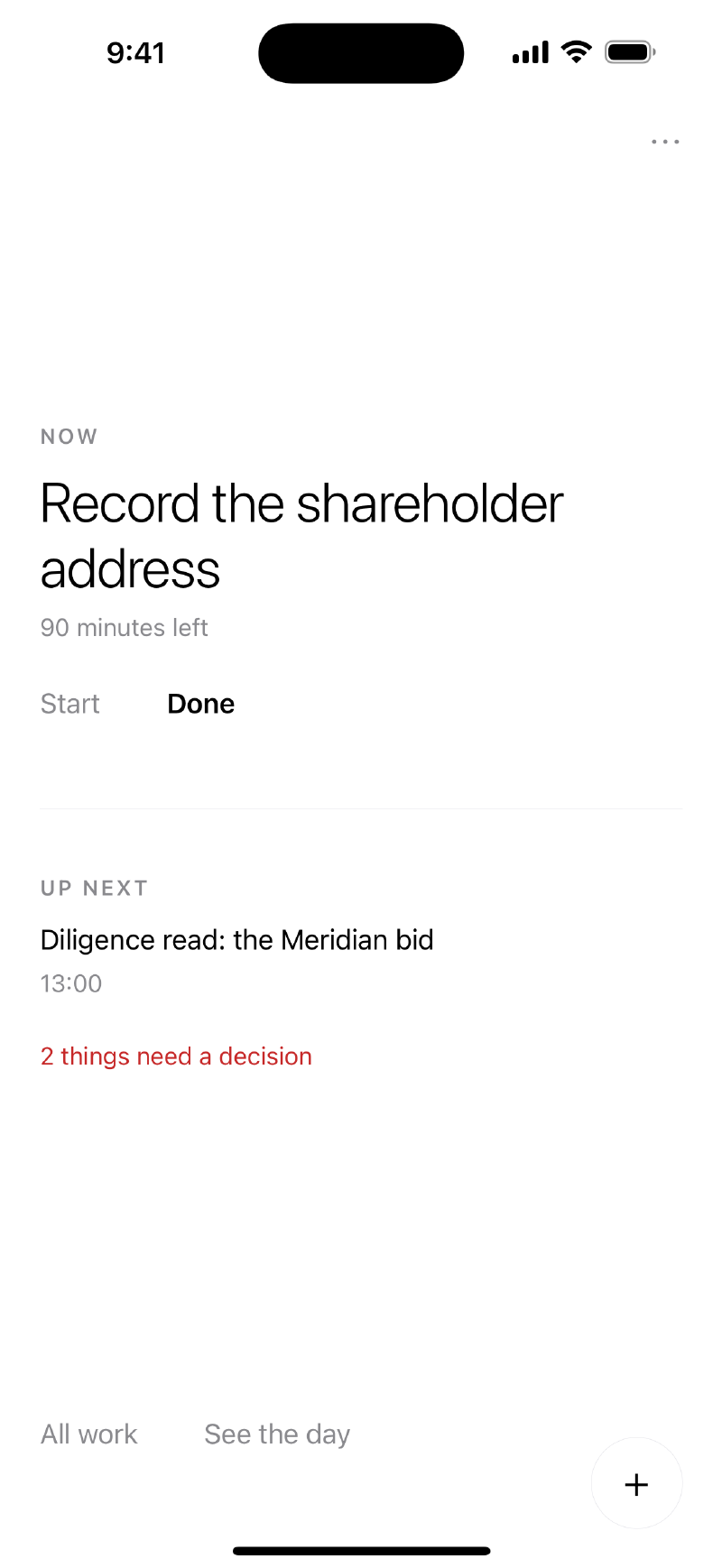
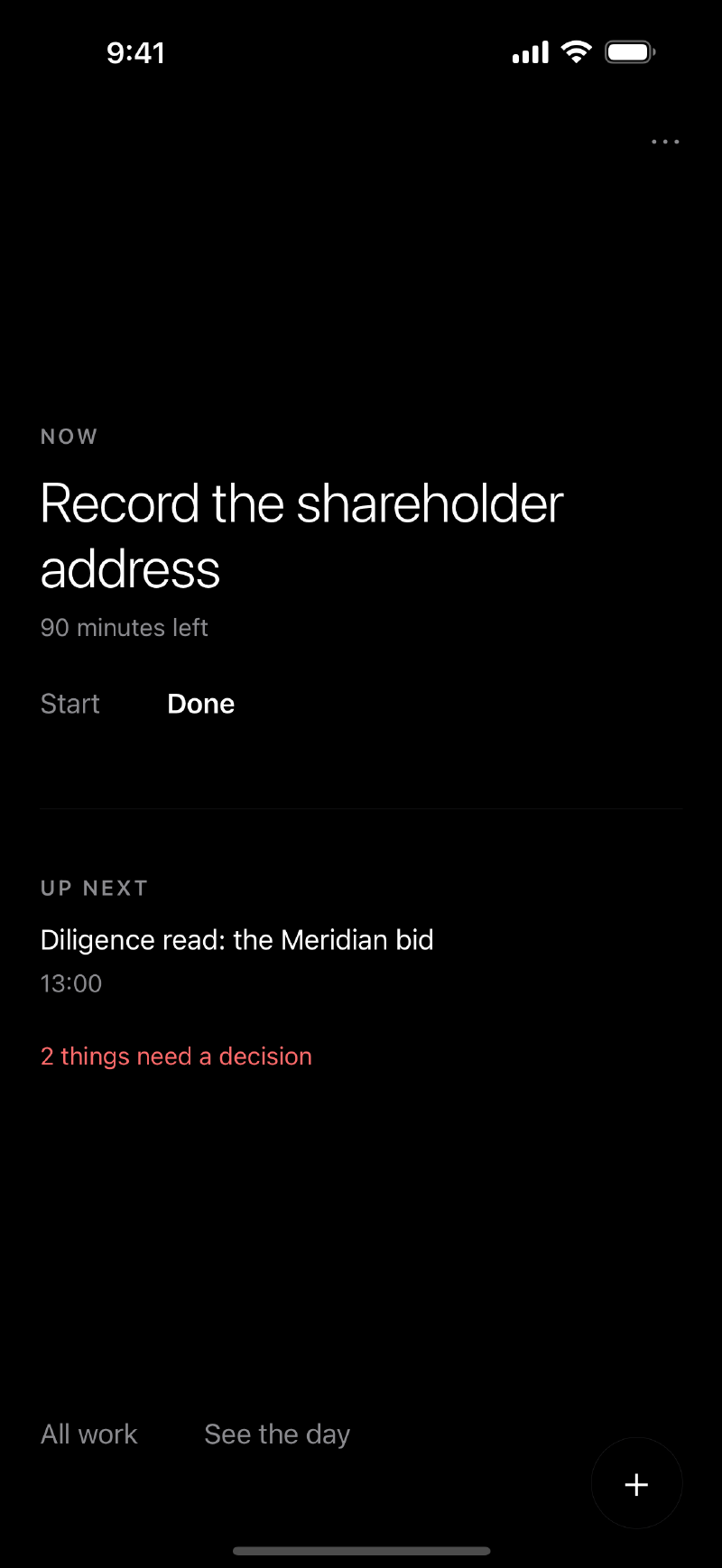
Open it, and the thinking is done.
Not a grid. A decision.
You will never open this and have to work out what to do. The hours you have were measured against the work you owe before you got here. What you are looking at is one thing, and how long is left of it.
The warning
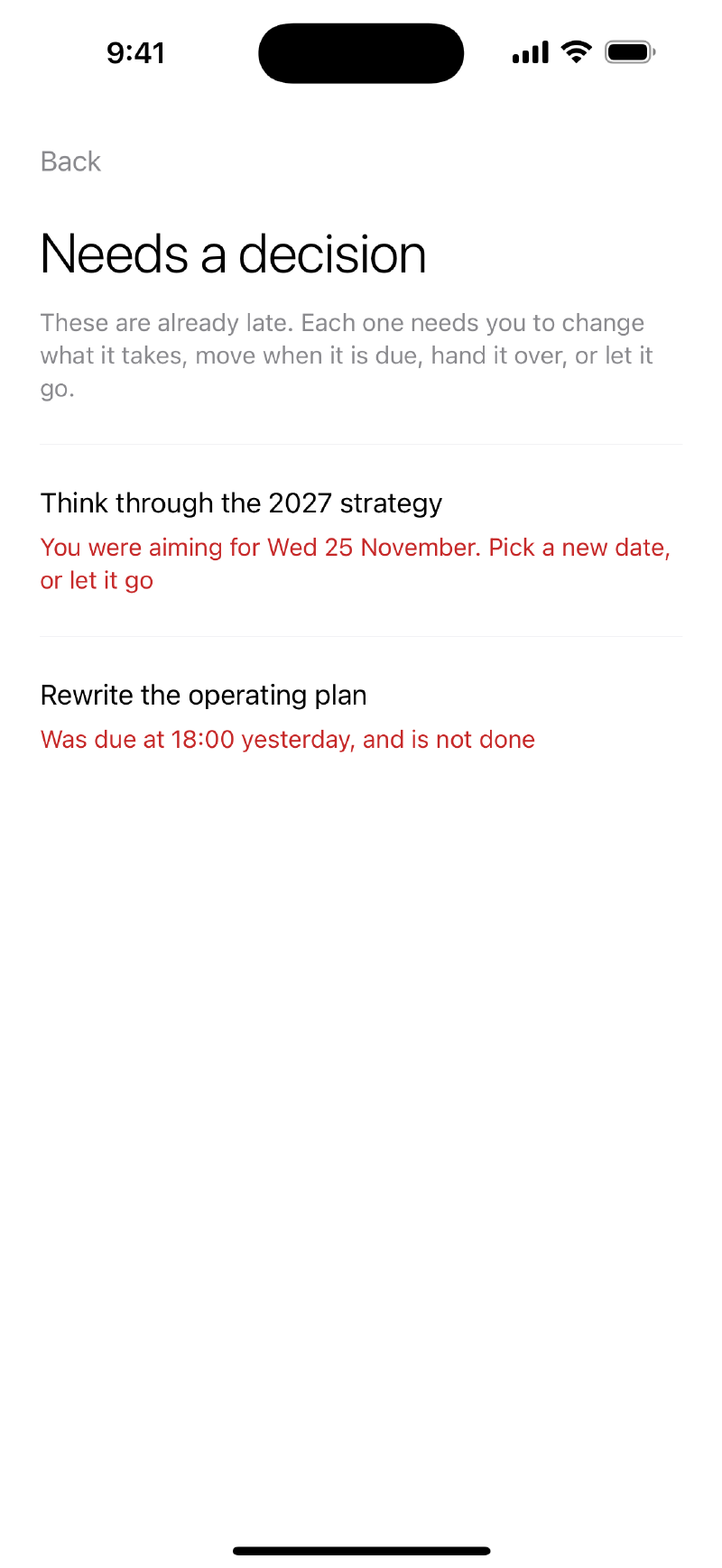
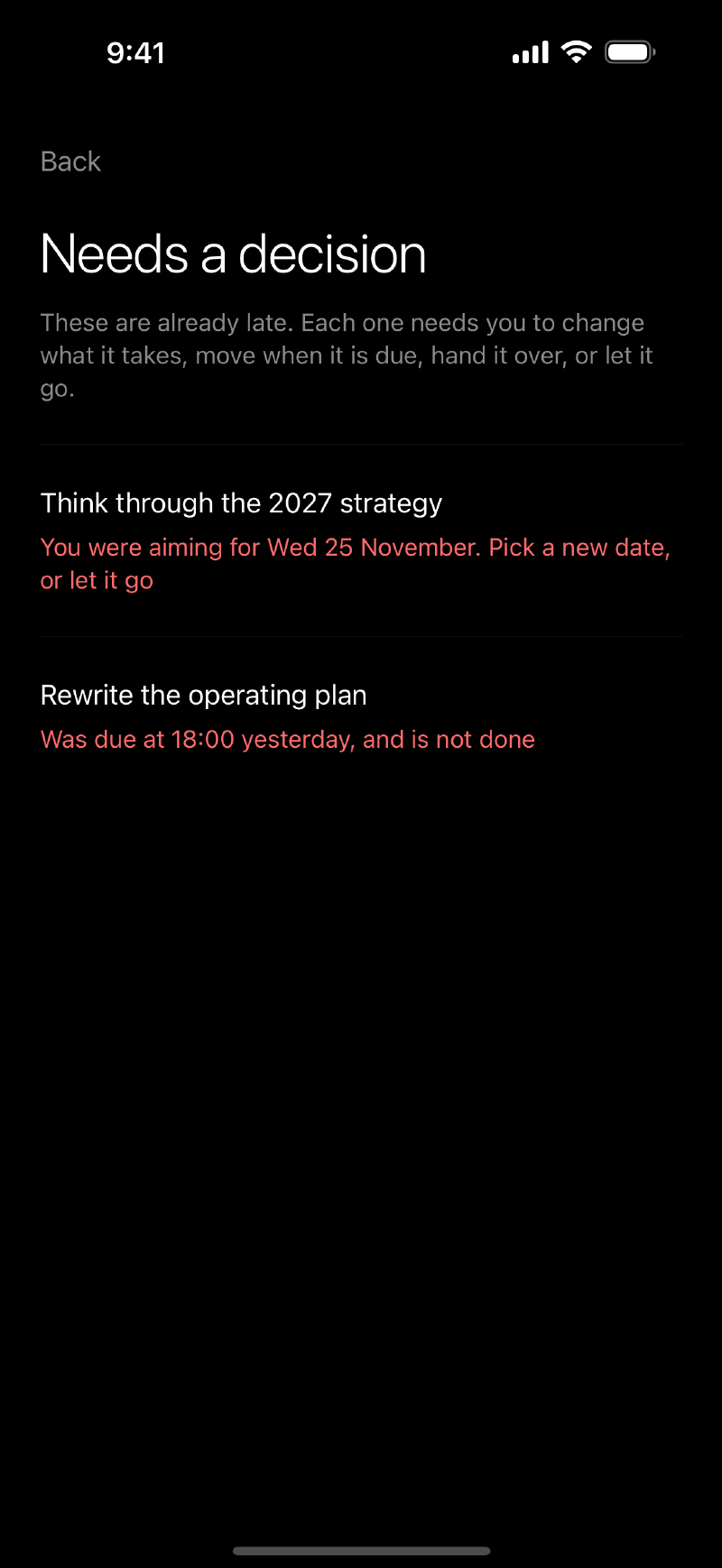
You find out on Monday.
Not at six on Friday.
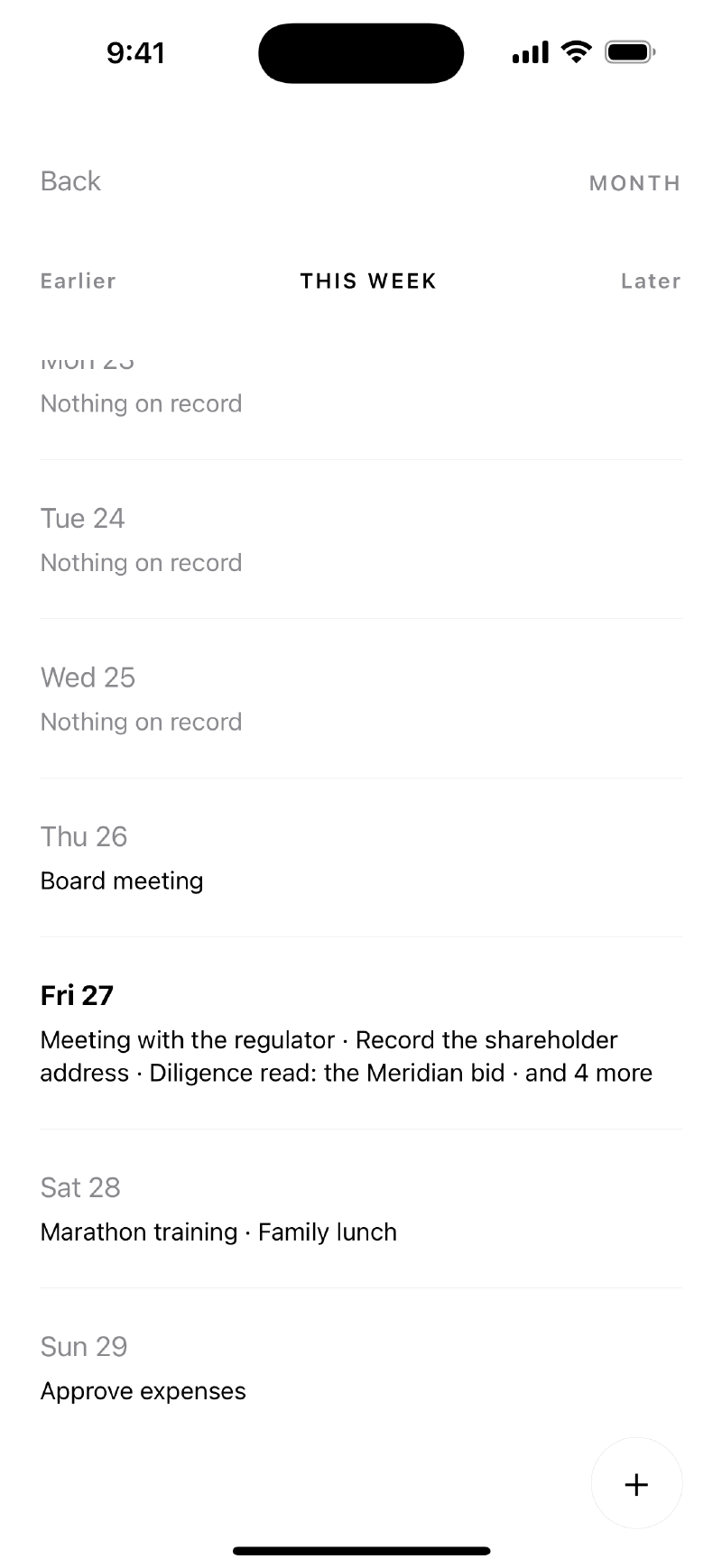
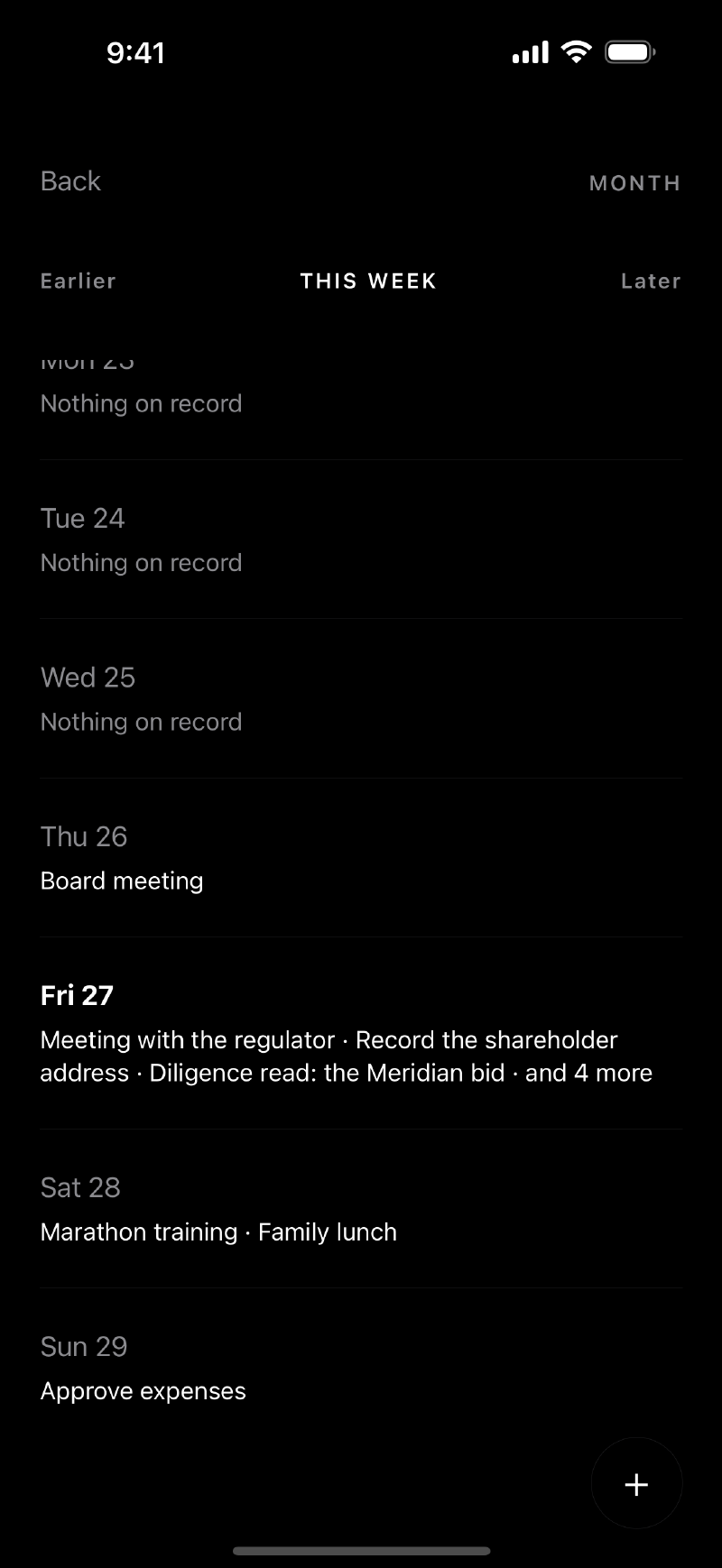
A deadline is not missed on the day it is missed. It is lost a week earlier, quietly, while the calendar says nothing at all. You are told the moment a commitment stops fitting, while changing it still costs you almost nothing.
The only thing left
to do is the work.
The day
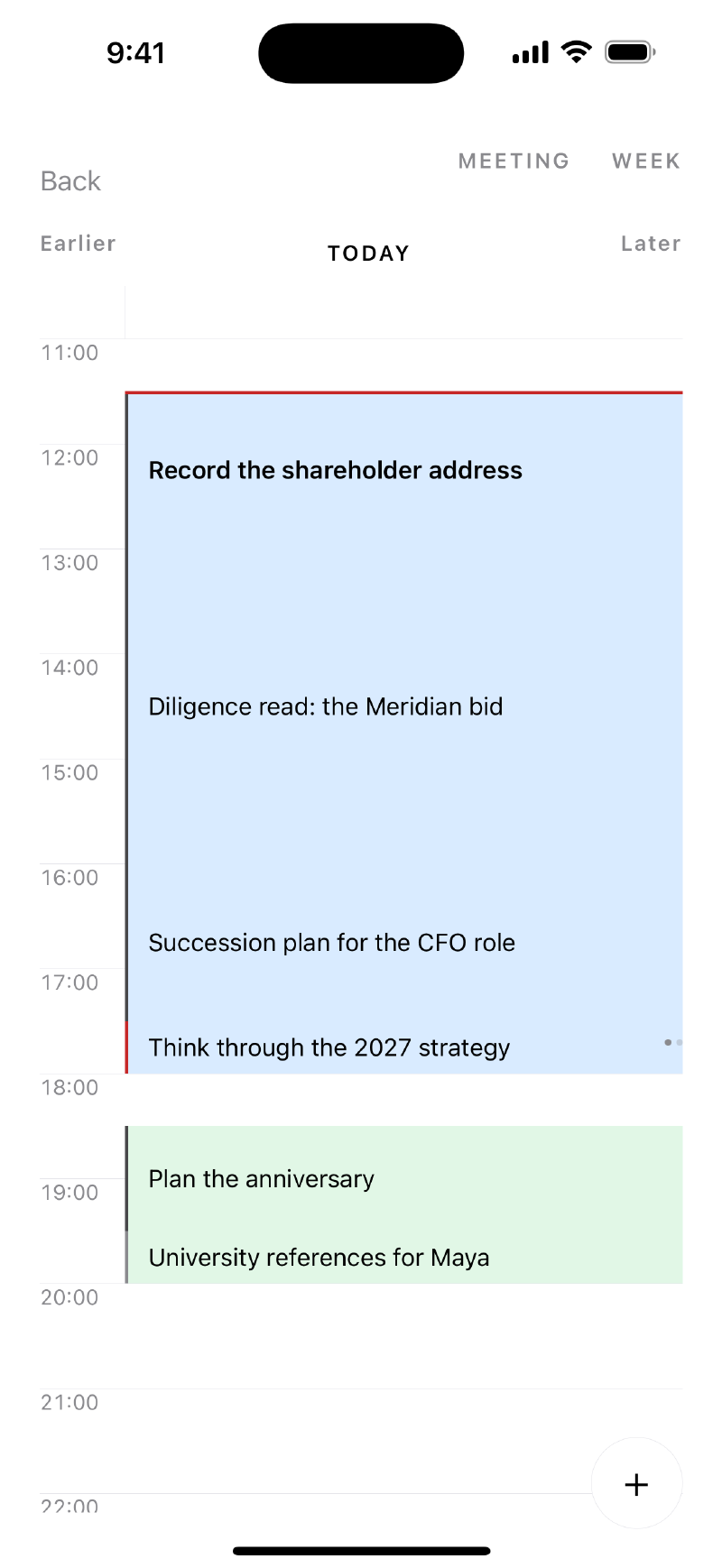
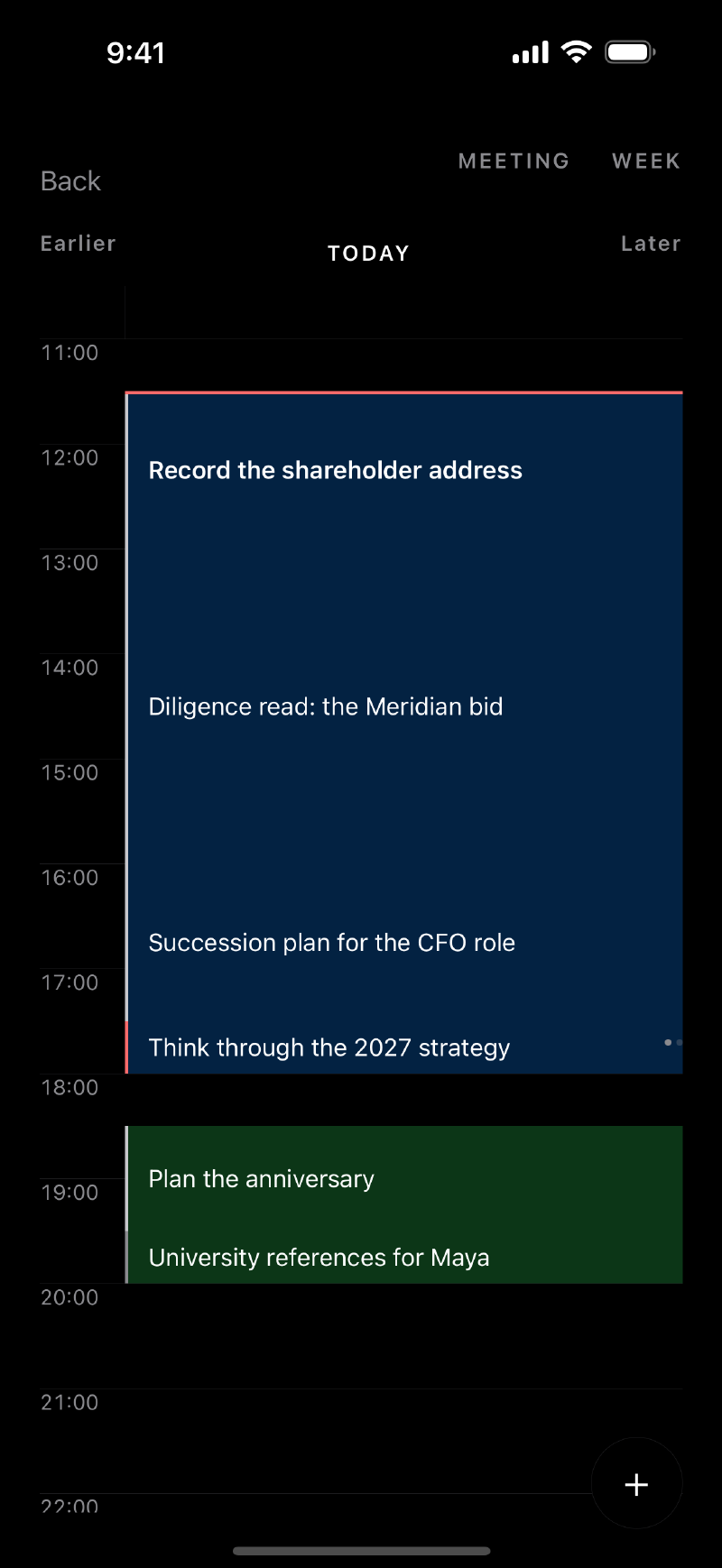
Your day arrives already arranged.
Meetings fixed. Work placed.
Meetings do not move, so the work does. It settles into the hours that are genuinely free, in the order that finishes the important thing first, and it settles again the moment anything changes. You never re-plan. You arrive, and it is done.
The evening
You get the evening back.
And it stays yours.
Work, family, fitness, your own time: each keeps its own hours, and nothing is ever booked into the wrong set. A calendar that treats your evening as spare capacity is how the evening disappears.
Where it lives
It never leaves the phone.
There is no account to create and nothing to sign in to. Your calendar is held in an encrypted database on your own device, and no analytics, advertising or tracking code is built into the app. Its App Store privacy label reads Data Not Collected, which is a statement of fact rather than a position.